The Shared Worktable, Before the Studio
A shared worktable can support focused making and easy exchange. Set clear rules for clutter, conversation, different tasks and fair access to the surface.
The common mistake with a shared worktable is treating it as a desk with extra chairs. The cost is predictable: territorial piles, awkward interruptions and the quiet assumption that whoever arrived first owns the surface. A shared worktable works better when people agree how to use it, then make those agreements visible.
Its practical purpose is simple: hold materials at a workable height while leaving room for others to make, ask and borrow. Trouble starts when the table is treated only as storage, or only as a place for conversation.
Clutter turns a common surface into private territory
A stack of notebooks, a tin of brushes and a half-finished model may be ordinary work in progress. On a shared table, they also occupy space someone else may need. Often the problem is not carelessness but the absence of an agreement about what may stay out.
Separate active work from storage. A tray or shallow box can hold materials in use; a labelled folder, portfolio or personal container can hold projects between sessions. This lets a project continue without asking everyone else to work around it.
Say you and two other makers share a table for drawing and collage. One person leaves paper scraps and glue sticks across the middle after lunch. The group agrees to give each active project a tray and clear the centre at the end of a session. The visible result should be a usable patch of table, while unfinished work stays together in its tray. If the tray cannot contain a project, the group can instead move it to a nearby shelf.
Unplanned conversation breaks concentration
Visibility makes exchange easy. It also makes every glance look like an invitation to comment. Someone testing a colour or drafting a difficult passage may not want feedback yet, though the work is plainly in view.
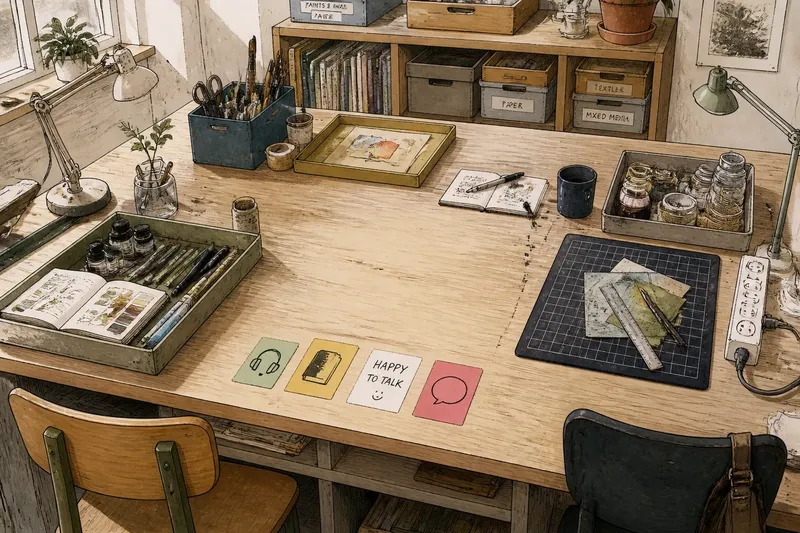
Agree on a simple signal for availability. A small card, a closed sketchbook or headphones can mean “working quietly”; an open notebook or an invitation on the table can mean “happy to talk”. Keep the signal optional and allow practical questions, such as asking whether the cutting mat is free.
Keep useful exchanges at the table: ask for a second pair of eyes, borrow a ruler or explain a material choice. Move longer discussions elsewhere. A shared table need not become a meeting room merely because people have gathered around it.
Different tasks compete for the same surface
Wet paint, laptop chargers, fabric cutting and small electronics each ask for a different kind of space. A broad, clear table can still be the wrong surface for a task that needs a cutting mat, clean paper or protection from splashes.
Name the practical needs rather than ranking the activities. A removable mat can protect the surface; a portable lamp can help with close work; a power strip can keep chargers from wandering across the table. Put shared tools in a movable box or caddy instead of assigning every activity a permanent corner.
Where materials could mark or damage the table, use suitable protective equipment and follow product instructions. For electrical, chemical or other significant hazards, use an appropriate workspace and seek qualified guidance rather than trying to adapt a communal table to every purpose.
Uneven access makes the arrangement feel unfair
Some people need the table for a short, precise task. Others may occupy it for a long session because their work cannot be moved easily. A first-come rule can favour people with flexible schedules or projects that spread out.
Try light-touch booking during busy periods, with open access when the table is quiet. A shared calendar, paper sign-up sheet or note on the studio door can make plans visible. Let someone reserve a section for a session without claiming the whole table for the day.
Access includes practical details. Keep a chair available for someone who needs to sit, leave a clear route to the table, and place commonly used tools where people can reach them without leaning across another person’s work. Adapt these arrangements to the space and the needs of the people using it.
How should people share a worktable?
What makes a worktable communal?
People share access, tools, attention and responsibility for keeping the surface usable. The arrangement becomes communal when expectations are discussed rather than left to whoever feels most comfortable claiming space.
Does a shared table need assigned places?
Not always. Assigned places can help someone who needs a stable setup, but they can also turn a common surface into private stations. Try temporary zones for specific tasks before making permanent claims.
How can people exchange ideas without interrupting?
Make invitations clear and keep feedback optional. Asking “Would you like a look?” gives the maker room to decline without explaining their concentration.
What belongs on the table between sessions?
Only items covered by the group’s agreement should remain. Give ongoing projects a named container or nearby shelf, so continuity does not depend on leaving materials spread across the shared surface.
Small agreements keep the table in common use
Write down the rules that address recurring problems. For each item, check what is happening and choose the corresponding action:
- Check whether an unfinished project fits in its tray; if it does, leave it there between sessions, but if it does not, move it to an agreed shelf or container.
- Check whether the centre is clear when a session ends; if it is, leave it available, but if it is not, move personal materials to their containers.
- Check whether a tool or project belongs to someone else; if it does, ask before moving it, but if its owner is unavailable, leave it in place and use an alternative tool.
- Check whether the maker has signalled that conversation is welcome; if so, ask your question, but if not, wait or leave a brief note.
- Check whether the table is busy before taking a long session; if it is, book a section or agree a time, but if it is not, use the space without reserving more than you need.
- Check whether a shared tool has a marked home; if it does, return it there, but if it does not, ask the group where it should go before putting it away.
- Check whether your activity could damage the surface or affect nearby work; if it could, use a suitable mat or another workspace, but if it cannot, keep materials within your agreed area.
Review the note when the work changes. People making large paper pieces may need different arrangements from those sharing laptops and sketchbooks. The aim is not to standardise everyone’s process, but to make the shared parts legible.
A shared worktable is useful because it lets making and exchange happen in the same place, not because it removes every inconvenience. Keep a clear patch for the next person, and store ongoing work somewhere that does not require them to negotiate for it. That small distinction is often enough to keep the table common.